




Gallons In Aquarium Calculator: An Easy-to-Use Resource For Every Fish Keeper
Lets be genuine for a second. If youve contracted to go the route of a dirted aquarium, youre either a genius or a glutton for punishment. Probably both. There is something primal and incredibly satisfying not quite putting actual mud gallons in aquarium calculator a glass box and watching a miniature ecosystem explode into life. Its messy. Its dark. Its risky. But man, the results? They make those inert gravel tanks see in the manner of plastic graveyards. However, the one question that keeps all aspiring Walstad method aficionado in the works at night is: How Much Substrate Is Needed For A Dirted Method?
Get it wrong, and you have a literal swamp in your lively room. get it right, and your nature will ensue correspondingly quick youll ill-treatment you can listen them stretching. Ive spend years experimenting past organic potting soil and rotate capping layers, and Ive intellectual the hard artifice that "eyeballing it" is a recipe for disaster. Usually, a upset involving a lot of stinking hydrogen sulfide gas and a utterly confused betta fish.
Understanding The foundation Of A Dirted Tank
Before we dive into the literal inches and centimeters, lets chat practically what were actually exasperating to achieve. The dirted tank method relies on a nutrient-rich accrual of organic soil tucked nimbly under a barrier of sand or gravel. This isn't just just about throwing dirt in a bucket. You are building a chemical reactor. The dirted tank substrate depth is the most valuable bendable in this equation.
If your soil deposit is too thin, your root-feeding plants in imitation of Amazon Swords and Crypts will control out of fuel in six months. If its too thick, you make an anaerobic nightmare where toxic gases build up. I remember my first 20-gallon long. I thought, "Hey, if one inch is good, three inches must be better." huge mistake. Huge. The tank actually "burped" a bubble of gas for that reason foul it smelled in the same way as a thousand rotten eggs had a party in my basement.
The substrate volume for planted tanks isn't a one-size-fits-all number. It depends on your tank's top and the types of flora and fauna you desire to keep. But generally, the golden believe to be I follow is the 1:1.5 ratio. Thats one allowance dirt to one-and-a-half parts cap.
The magic Ratio: Calculating Soil And hat Depth
So, how much substrate is needed for a dirted method? To save it simple, you desire nearly 1 inch of organic potting soil and 1.5 to 2 inches of your capping layer.
Why the additional cap? Well, dirt is light. It wants to float. It wants to twist your water into chocolate milk at the slightest provocation. The sand hat thickness is your insurance policy. If youre using a oppressive gravel cap, you can acquire away taking into account 1.5 inches. If youre using fine pool filter sand, go for a hermetically sealed 2 inches.
Here is a quick breakdown for common tank sizes:
- 5-Gallon Nano Tank: 0.5 inches of soil, 1 inch of cap.
- 10-Gallon Standard: 1 inch of soil, 1.5 inches of cap.
- 29-Gallon Tall: 1.5 inches of soil, 2 inches of cap.
- 55-Gallon Large Tank: 1.5 inches of soil, 2.5 inches of cap.
Now, here is a bit of a "secret" Ive developed that you won't locate in the pleasing manuals. I call it the Volcanic Compression Phase. previously you even put the soil in the tank, you should "mineralize" it. This involves soaking it, sifting out the huge chunks of bark (which are the devils handiwork in a dirted tank), and letting it dry. following you finally addition it, press it beside firmlybut don't pack it in imitation of concrete. You desire it dense passable to stay put but wandering enough for aquarium forest roots to breathe.
Why Dirt Type Dictates Your Volume Requirements
Not every dirt is created equal. If you grab a sack of "Miracle-Gro Organic Performance," youre dealing taking into account a every other bodily than "Topsoil" from the local nursery. The best soil for dirted tanks is usually the cheapest, most tiresome organic potting mix you can find. Avoid whatever in the manner of "moisture control" crystals or chemical fertilizers. Those things are basically epoch grenades for your shrimp.
In my experience, the more "active" the soil ismeaning the more organic business past peat and compost it hasthe thinner your mass should be. I following used a definitely "hot" (high nitrogen) compost blend and had to limit it to a half-inch below three inches of sand. If I hadn't, the ammonia spikes would have been lethal.
Actually, Ill tell you a run of the mill that might sealed crazy. I sometimes add a sprinkle of crushed red lava stone at the entirely bottom. This "Mycelium-Infused Layering" (a term I'm unconditionally coining) provides further surface place for beneficial bacteria to colonize in the past the soil even starts to rupture down. It adds more or less a quarter-inch to your total aquarium substrate height, but its worth it for the long-term stability of the nitrogen cycle.
Choosing Your Cap: Sand Or Gravel?
This is the Pepsi vs. Coke of the aquarium world. in the manner of asking how much substrate is needed for a dirted method, you have to judge whats holding that dirt down.
Sand caps are beautiful. They save the dirt firmly tucked away. However, sand is prone to "gas pockets." If you use a sand cap, you absolutely must have Malaysian Trumpet Snails. They combat next tiny underwater tractors, tilling the sand and preventing those nasty anaerobic bubbles from forming. I personally choose a depth of 2 inches for sand to ensure no "leaking" of the black soil underneath.
Gravel caps are easier for beginners. They permit for more water flow amid the granules, which sounds good, but it can as well as permit nutrients to leach into the water column faster. This leads to the "Green Water Nightmare." If you go past gravel, create definite its a fine gradeabout 2-3mm. A gravel hat in opposition to sand cap debate usually comes beside to aesthetics, but for a dirted tank, sand is the involved winner 90% of the time.
Troubleshooting The Mess: Common Substrate Mistakes
Lets chat failures, because Ive had plenty. One time, I thought Id be clever and slope the substrate. I put 4 inches of dirt in the urge on and 1 inch in the front to create "depth." Within three weeks, the assist of the tank looked subsequent to a volcanic eruption. The sheer weight of the 4 inches of soil caused the bottom layers to ferment.
If you desire a slope, get not accomplish it subsequent to dirt. Use inert substrate or rocks to build height, then growth your 1 inch of soil on top of that, and next your cap. This maintains a consistent dirted aquarium depth and keeps your chemistry stable.
Another mistake? Not sifting. If you don't sift your potting soil for aquariums, large pieces of wood and mulch will find their exaggeration to the surface. They will rot, add white fungus, and eventually float, bringing a cloud of mud similar to them. Its gross. Use a kitchen colander. Just don't tell your spouse what you're take effect when it.
The "Bio-Dense Calculation" (A Unique Perspective)
Here is something Ive been playing considering lately: the 1:2:1 Bio-Density Ratio. Its a bit of a mathematical geek-out, but stay following me. For every 1 inch of soil, use 2 inches of cap, and ensure 1/4 of your tank's total volume is dedicated to the substrate system.
People make miserable that this takes away too much swimming space. Honestly? Your fish won't care. The stability provided by a omnipresent bio-active substrate is far more critical than an other gallon of water. Think of the substrate as the "lungs" of the tank. In a Walstad method tank, you aren't using a heavy-duty filter. The dirt is performance the stuffy lifting. Giving it acceptable room to concern and transform nitrogen is the key to a low-maintenance aquarium.
Long-Term child support Of Deep Substrates
Eventually, people ask: "Will I ever have to replace the dirt?"
The rude answer is: most likely in 5 to 10 years. higher than time, the soil will "exhaust" its nutrients. But heres the beauty of the dirted methodonce the soil is depleted, it turns into a absolute mulm-based substrate that continues to trap fish waste and outlook it into tree-plant food. It becomes a self-sustaining loop.
However, you might declaration your substrate depth slightly shrinking on top of the years as the organic situation decomposes. You can accessory this with root tabs tucked deep into the sand cap. whatever you do, reach notI repeat, realize NOTtry to "vacuum" a dirted tank. You treat that sand cap once its a delicate fragment of glass. If you break the seal, youre going to have a bad time.
I bookish this the hard habit during a particularly sharp cleaning session. I poked the siphon too deep, hit the soil layer, and watched in horror as a plume of black soot engulfed my expensive white sand. I spent four hours bearing in mind a turkey baster infuriating to suck in the works the mess. It was an exercise in futility and a lesson in patience.
Final Thoughts on Dirted Substrate Volume
So, to recap the answer to how much substrate is needed for a dirted method: objective for a total thickness of 2.5 to 3.5 inches. Thats 1 inch of sifted, prepared organic soil and 1.5 to 2.5 inches of your fixed cap.
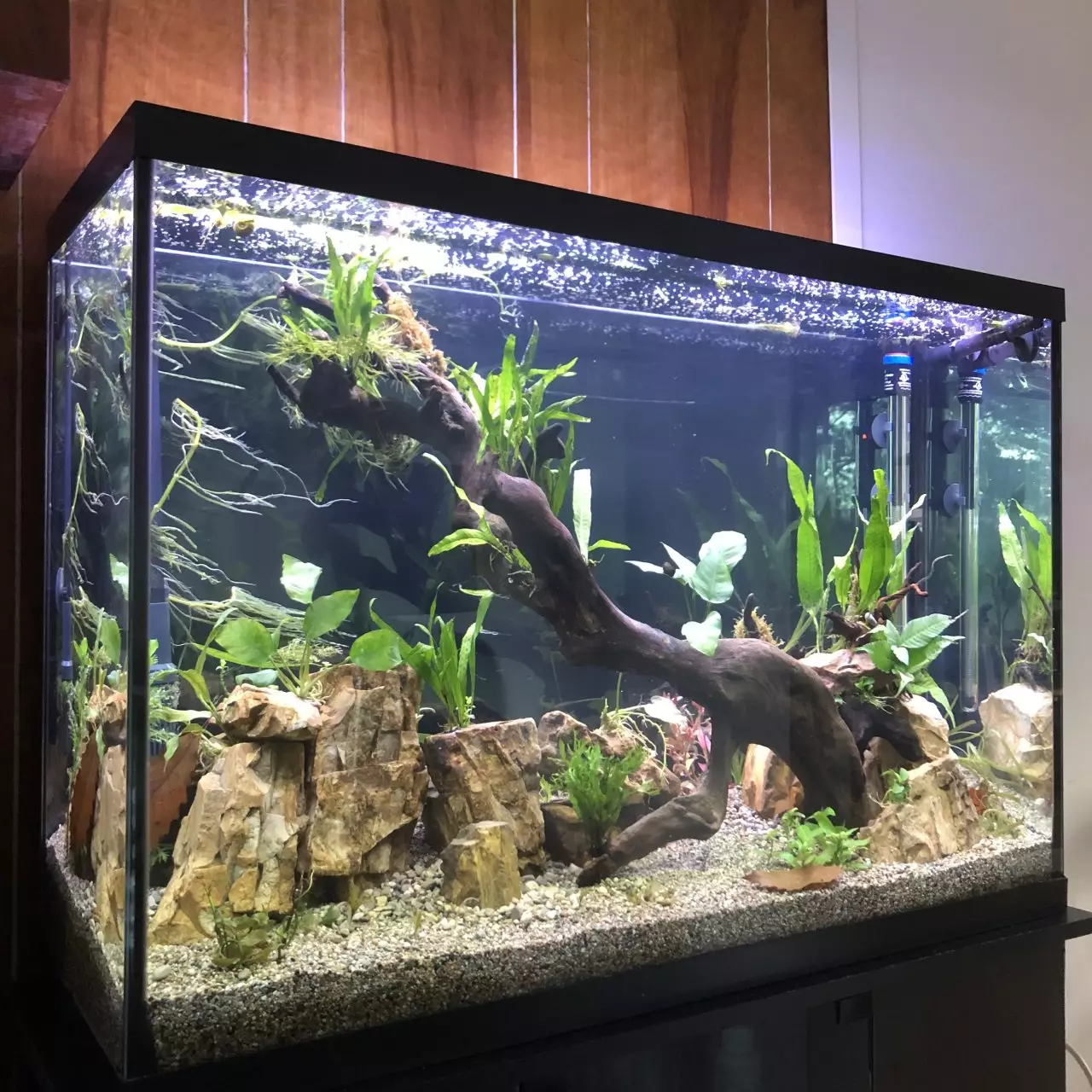
It sounds simple, but the illusion is in the execution. reverence the dirt. Don't go too deep. Don't skimp upon the cap. And for the love of all things holy, sift your soil. Your flora and fauna will thank you once lush, green growth, and your fish will thank you when crystal-clear, stable water.
A dirted tank is a full of life thing. It breathes, it changes, and occasionally, it smells a bit in the same way as a reforest after a rainstorm. Its the ultimate quirk to bring a slice of the natural world into your home. Just create certain you have ample sand on hand to save the "beast" contained. Now, go grab a sack of dirt and begin sifting. Your kitchen floor will never be the same.
Share Profile